Eleven years of corporate travel operations, one contract.
We bring your team together on the right route.
One team from planning to the final report.
Operations that scale from 10 to 1,000 people.

Overview
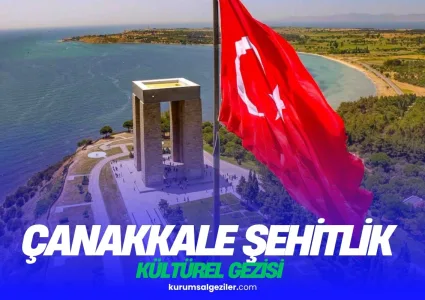
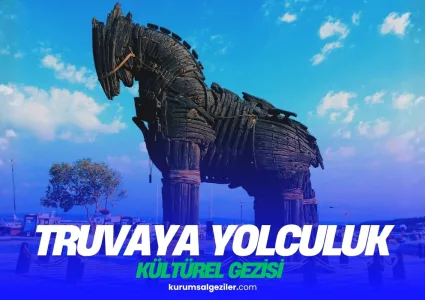
Çanakkale is the destination where programmes themed on institutional memory and shared values are delivered most powerfully in Türkiye. The memorials and Troy bring two different historical layers into the same programme; both take on meaning through guided narrative.
Why do companies choose this destination?
The main reason companies choose Çanakkale is the shared emotional effect the programme leaves on a team; it builds a different kind of bond from an ordinary cultural trip. The second is that the distance from Istanbul makes a single-day programme possible. The third is that the guided narrative turns the programme from a tour into a shared experience.
Which locations are visited?
The stops below are planned individually or combined depending on the programme; the route is finalised according to group size and total duration.
- Çanakkale memorials: a half-day block with guided narrative, spread across the Gallipoli Peninsula.
- Ancient city of Troy: a UNESCO-listed site roughly 30 kilometres from the city.
- Çanakkale Naval Museum: an indoor visit; an alternative independent of the weather.
- Kilitbahir and Kabatepe: stops on the peninsula route; the ferry crossing is part of the programme.
- Troy Museum: a modern museum building; the narrative that completes the Troy visit.
Which teams does it suit?
Companies running communication work themed on institutional memory, continuity and shared values; organisations planning anniversary programmes; and teams bringing different departments together are the most frequent choices.
How is a sample run-of-show built?
A typical single-day flow starts with a 06:30 departure from Istanbul and reaches the peninsula around midday. The memorials are toured with a guide before lunch, which is planned on the route. In the afternoon Troy or the Naval Museum is added. The return is in the evening. On two-day formats the first day is the peninsula and the second is Troy and the museum.
How are transport and logistics planned?
Roughly 320 kilometres from Istanbul, four to four and a half hours by road. The crossing to the Gallipoli Peninsula is by ferry and the sailing times set the flow of the programme. Ferry bookings are blocked for the group in advance. For teams coming via Bursa the distance is roughly three hours.
Which programme formats work here?
Single-day history and institutional memory programmes are the most common format. One-night formats are preferred in order to separate the peninsula from Troy. Family programmes are rarely run at this destination; the weight of the content suits adult groups.
When should it be planned?
April-June and September-October are the most suitable periods. Around 18 March demand rises and capacity fills early. In winter, wind and rain on the peninsula reduce comfort; more weight is given to indoor stops.
What should be watched when planning?
Ferry times are the hardest constraint in the programme; missing a sailing shifts the entire flow and pushes the return into late hours. Buffer time is therefore left on the return to catch the next sailing. For the 18 March period at least 10 weeks of planning is needed.
Note: the programme content is commemorative; celebration, gala or loud entertainment components are not added to the format at this destination.
Share your date, headcount and budget band through the quote form and a suitable route for this destination, with tiered pricing, follows within the same working day.
FAQ
<p>Yes, but it makes a long day: the round trip is roughly nine hours on the road, with a 06:30 departure and a late return. For programmes wanting to see both the peninsula and Troy, an overnight stay is recommended.</p>
<p>Programmes are planned from 10 to 250 people. At the memorial sites, groups above 50 are split per guide and a headset narration system is used.</p>
<p>It can, but the region is very busy then; accommodation and ferry capacity fill early. At least 10 weeks of planning is needed.</p>
<p>Guided narrative is at the centre of the programme; the content is commemorative and celebratory language is not used. At the company's request a corporate closing address can be added to the programme.</p>
Çanakkale corporate programme prices are prepared according to headcount, season, transport type, accommodation standard, catering plan, guiding and any team activity required. For a firm price, share your company size and date range.
Çanakkale can be built at different scales for department gatherings, dealer trips, executive meetings, incentive programmes and employee motivation events.
Yes. Alternative programmes can be prepared on the Çanakkale route in the budget, luxury and premium segments. Hotel, transport, restaurant and activity level are selected according to the budget segment.
Depending on the programme content, contribution to the local economy, low-carbon transport, low-waste operation, nature-focused activity and carbon-free alternatives can be added to the scope.