Eleven years of corporate travel operations, one contract.
We bring your team together on the right route.
One team from planning to the final report.
Operations that scale from 10 to 1,000 people.

Overview
Singapore programmes are built around technology, urbanism and innovation. The planned structure of the city state makes institutional visits and the field learning component easier to run productively than anywhere else.
Why do companies choose this destination?
The main reason companies choose Singapore is that a concrete learning programme can be built around technology and urbanism. The second is that regional office and partner visits can be added to the same programme. The third is that the standard of security and infrastructure makes the operation predictable.
Which locations are visited?
The stops below are planned individually or combined depending on the programme; the route is finalised according to group size and total duration.
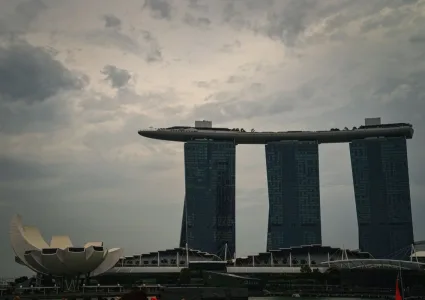
- Marina Bay and Gardens by the Bay: the centre of the urbanism and design narrative; the evening show is added to the programme.
- Technology and start-up centres: the institutional visit component; the appointment process is planned separately.
- Chinatown, Little India and Kampong Glam: a route through the cultural layers; suited to walking discovery.
- Sentosa: an additional half-day block; suited to team activities.
- Singapore City Gallery: a narrative on city planning; completes the field learning component.
- Hawker centres: a gastronomy stop; an economical and distinctive option for a group meal.
Which teams does it suit?
Technology and R&D teams, executive teams planning regional expansion, and companies running a high-budget reward programme are the most frequent choices.
How is a sample run-of-show built?
A flow with three overnight stays starts on the first day with arrival and rest (the flight is long). The second day is an institutional visit in the morning, then the City Gallery and Marina Bay in the afternoon, with the show in the evening. The third day is the cultural neighbourhoods and Sentosa. The fourth day is free time and the return.
How are transport and logistics planned?
The direct flight from Istanbul takes roughly ten hours; the time difference is five hours. No programme is therefore planned for the arrival day. Changi Airport is 30 minutes from the centre by metro. Visa conditions for a Turkish passport are checked as current. On programmes requiring a visa the application calendar is built backwards from the programme date; the document list goes to participants in one message, and passport validity checks and appointment scheduling are tracked by the operations team. The visa outcome is individual and at the consulate's discretion.
Which programme formats work here?
Incentive and reward programmes with two or three overnight stays are the most common format; field learning and partner visits can be added to the same programme.
When should it be planned?
The tropical climate runs all year; short bursts of rain are possible in every season and an indoor alternative is planned as standard. February-April is the relatively drier period.
What should be watched when planning?
For international programmes we recommend 12-16 weeks of planning. The participant list must be confirmed at least 8 weeks ahead; flight allocation and cancellation conditions are shown as separate line items in the quote. Because of the flight time and the time difference, at least three overnight stays are planned.
Note: because of the long flight and the time difference, no active programme is planned for the arrival day; this is standard practice for participant comfort.
Share your date, headcount and budget band through the quote form and a suitable route for this destination, with tiered pricing, follows within the same working day.
Destination Info
- Visa StatusTo be checked for each programme
- LanguagesLocal language, English
- Currency UsedSGD
- DistancePlanned with flight options from Istanbul
FAQ
<p>At least three overnight stays are needed. Because of the ten-hour flight and the five-hour time difference, no active programme is planned for the arrival day; shorter formats are inefficient.</p>
<p>It is. Visits to technology centres and the start-up ecosystem are arranged by appointment; the request must be made at least 8 weeks ahead and acceptance is at the discretion of the organisation concerned.</p>
<p>In a tropical climate short bursts of rain are possible in every season; an indoor alternative is planned from the outset for outdoor components.</p>
<p>Programmes are planned from 8 to 40 people. Because of the flight cost, this destination is generally built for selected small groups.</p>
Singapore corporate programme prices are prepared according to headcount, season, transport type, accommodation standard, catering plan, guiding and any team activity required. For a firm price, share your company size and date range.
Singapore can be built at different scales for department gatherings, dealer trips, executive meetings, incentive programmes and employee motivation events.
Yes. Alternative programmes can be prepared on the Singapore route in the budget, luxury and premium segments. Hotel, transport, restaurant and activity level are selected according to the budget segment.
Depending on the programme content, contribution to the local economy, low-carbon transport, low-waste operation, nature-focused activity and carbon-free alternatives can be added to the scope.